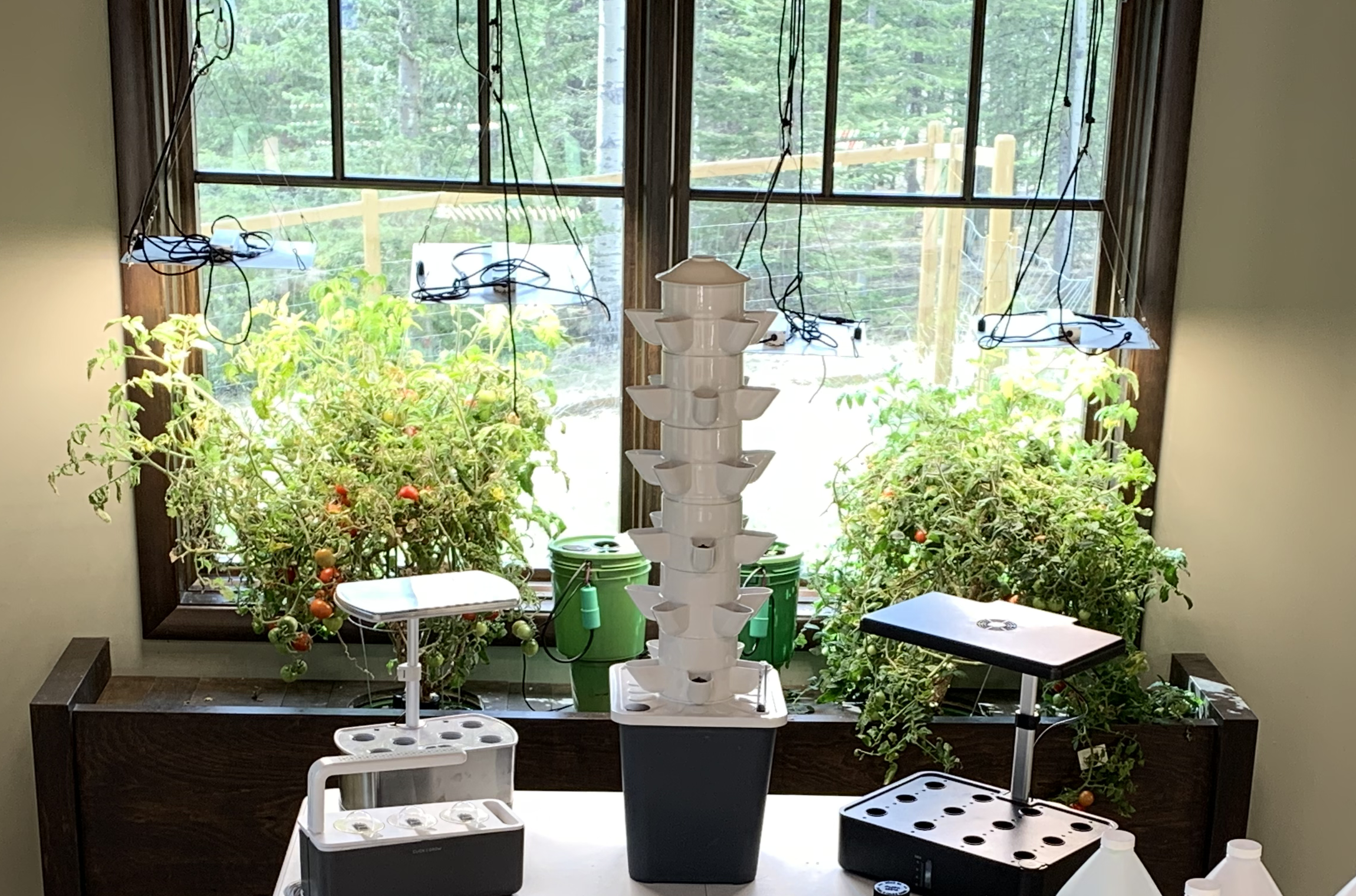
It doesn't matter who made it, or whether they're still around. What it holds does.
If you bought it, there's a good chance the reservoir size is already there — thirty-nine models, each with its number filled in. An AeroGarden Harvest Elite holds 0.6 gallons. Pick yours off the list and move on — or two of them, if that's what you run.
If it isn't on the list — or if ours isn't yours, because you took some out for the airstone or the spec rounded — you set the real number yourself. Nobody else can measure your tank: it's a jug and ten minutes, and then you know it rather than guess it. And when there's no template at all, you build one — your name for it, your number, and the style you actually built: DWC, Kratky, NFT, ebb and flow, wick, drip, dutch bucket, aeroponic, or something else entirely.
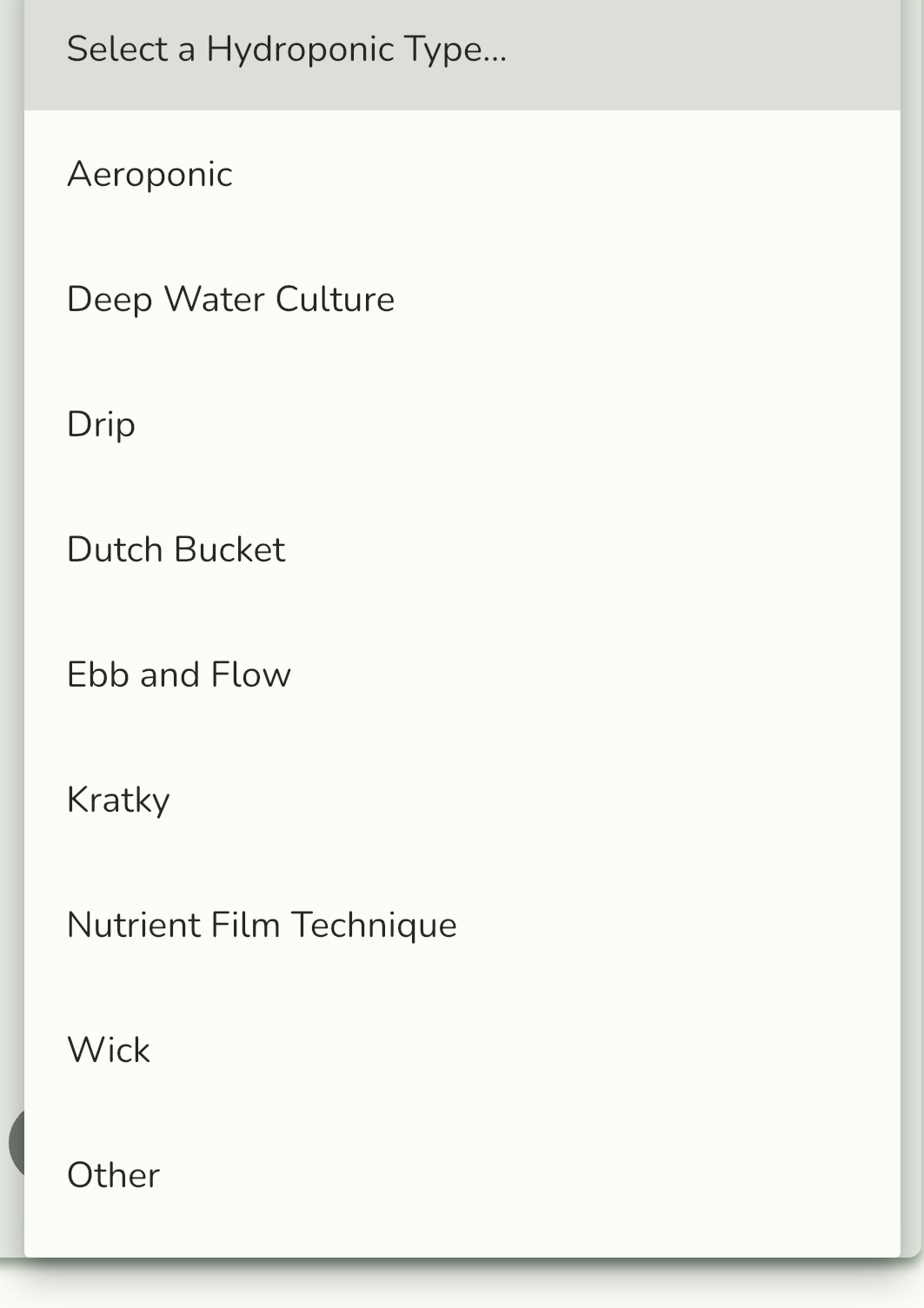
Nine styles, and the ninth is Other.
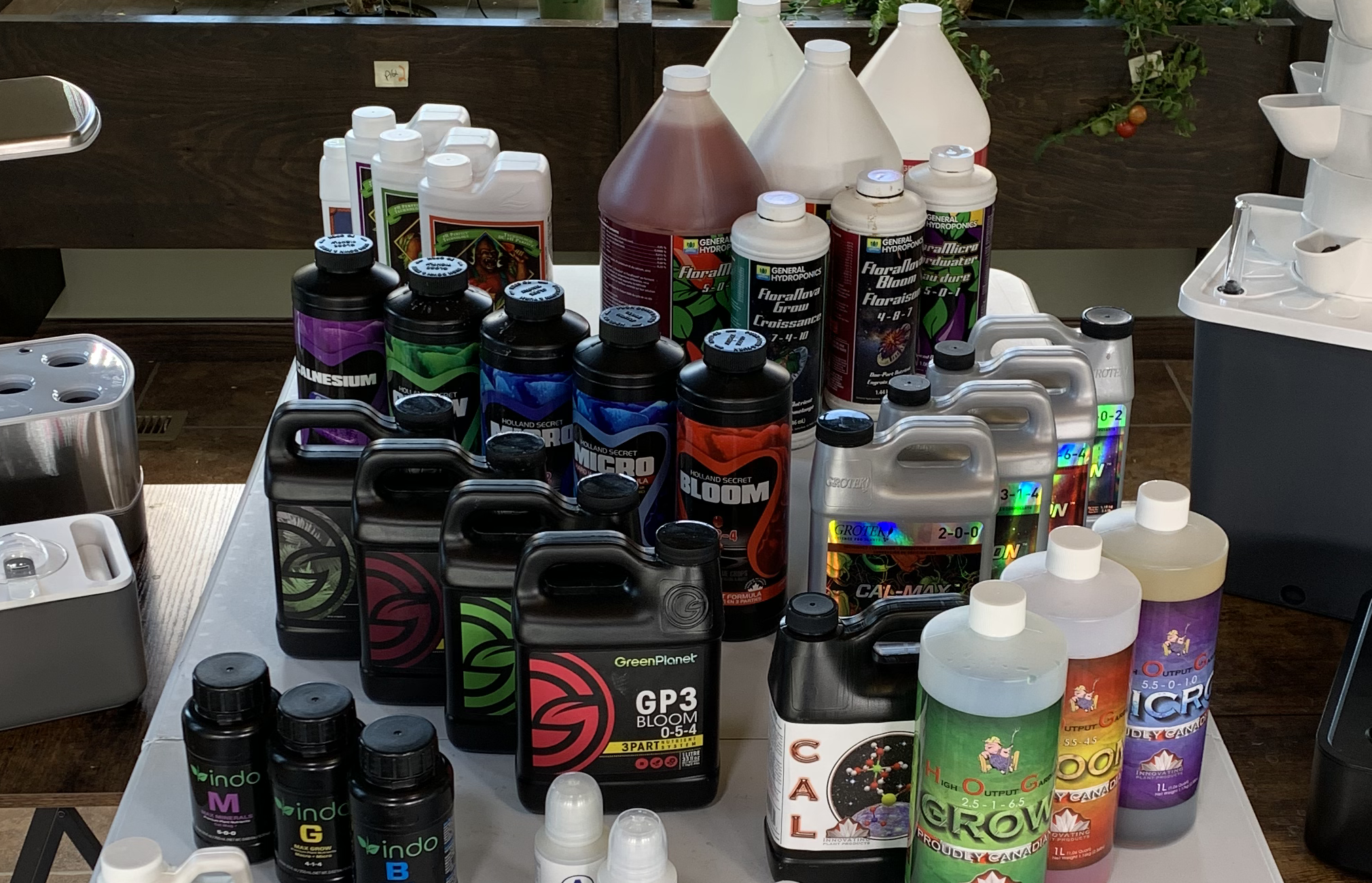
Either way the calculation is the same: your plant, the stage it's at, the readings you took, and the volume — ours or yours, it doesn't check. What comes back is a feed sized for the water that's actually in there, and the water goes in by the jug: a cup, 250 ml, a quart, up to a full jug — and the feed is worked out from the amount you pour. How it works →